





The Vietnam – EAEU Free Trade Agreement come into effect in October 2016. It is a strategic agreement on many aspects especially on trading. However, Russia and Kazakhstan expressed their concern that the potential ban on chrysotile in Vietnam without any scientific evidence may affect the agreement.
Chrysotile, derived from the Greek with the word “chrysos” meaning “gold” and “tilos” meaning “fiber”, is composed of small, curly and soft fibers. The chrysotile fiber is cylindrical spiral, hollow and easy-to-bent. With its superior and irreplacable characteristics such as high mechanical strength, high-elasticity, anti-friction, fire resistence, alkali-resistence, insulation, insolubility, anti-bacteria and scatter resistance, chrysotile is used as an unput material for more than 3,000 products.
Whereas, amosite, crocidolite, tremolite, actinolite, and anthophyllite are all amphibole type of asbestos fiber, which is straight and needle-like and has a long half-life. Once in the human lung, amphibole fiber could cause tumors and inflammation symptoms. After 10 to 20 years of incubation, the tumor will develop into cancer and other lung related diseases. Currently, the amphibole asbestos has been globally banned under any form because the poor working condition and wrong uses of asbestos such as spraying in the past caused the transmission of the fiber into the air, which leads to occupational lung diseases. Asbestosis patients recently found were the result of the amphibole asbestos exposure 20 to 40 years ago.
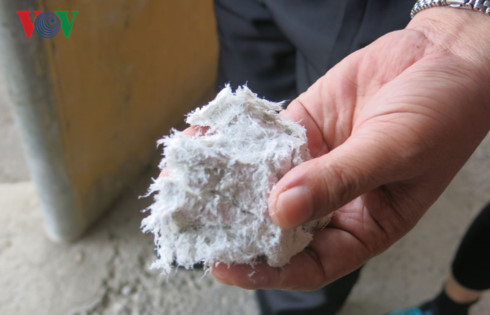
However, the impact of chrysotile on human health has been a controversial topic for decades. Many studies publishing in the most prestigious scientific journals such as British Journal of Industrial Medicine and American Review of Respiratory Disease have proved that “protecting human health” is just a convenient reason used by the anti-chrysotile party. The economic war to replace chrysotile fiber by PVA fiber is a reason to carefully evaluate the ban because there have not been any cases of lung cancer and mesothelioma associated with chrysotile over the past 60 years.
Nowadays, only chrysotile is used under control in many countries across the world such as the United States, Canada, Russia, Mexico, Brazil, Ukraina, Kazakhstan, Kyrgyzstan, Uzbekistan, China, India, Thailand, Singapore, Indonesia and Vietnam, etc.
To call for the ban on chrysotile, the anti-chrysotile party is giving the “estimated” and “predicted” figures as evidences. For example, in Japan, when an employee at a sake production factory diagnosed with cancer, they assumed that the cause was the chrysotile-containing filter in the factory. In Italy, when a railway worker had cancer, they blamed it for the chrysotile-containing brake. If the above assumption was true, a haft of Russian population would have cancer as the country have mined and used chrysotile for hundreds of years especially in road building industry. Similarly, more than 60% of the population drinking water from chrysotile-containing pipes in Brazil and more than 5,000 employees working at fibro cement factories in Vietnam cannot escape the death sentence.
In Vietnam, both the Ministry-level researches namely “Research and assessment on asbestos cement roofing industry and the effects of chrysotile on human health – Recommendations for solutions” conducted by Ministry of Natural Resources and Environment in the period 2002-2003 and the “Research on the asbestos related diseases in exposed people” conducted by Ministry of Health with the sponsor from Ministry of Health, Labour and Welfare of Japan via the World Health Organization (WHO) concluded that “there have been no cases of asbestos-related diseases detected”. However, the results of these studies was denied by the anti-chrysotile parties as they criticized the domestic researchers as “untrustworthy” and “unqualified”. Consequently, it put the public and the producers themselves in doubt and confusion.

In this circumstance, some Ministries and Departments have proposed to ban the use of chrysotile by 2020 and 2023; and recommended the factories to switch to produce substitute products. In fact, may factories have tried to produce the non-chrysotile products but they all failed. Confused about the future, the factories have sent petitions to the National Assembly. Despite being a legal business line, the AC roof sheet production industry has been struggling due to unstable policies.
On 06 June 2017, the Russian Trade Representative sent the Official Dispatch No.T704-438 which transferred the document from the Ministry of Economic Development of the Russian Federation to the Ministry of Industry and Trade of Vietnam to express the concern of Russian Government over the potential ban on chrysotile in Vietnam by 2020 without scientific evidences. Currently, Vietnam imports 60,000 tons of chrysotile per year from Russia and Kazakhstan to use as an input material in fibro cement roof sheet production.
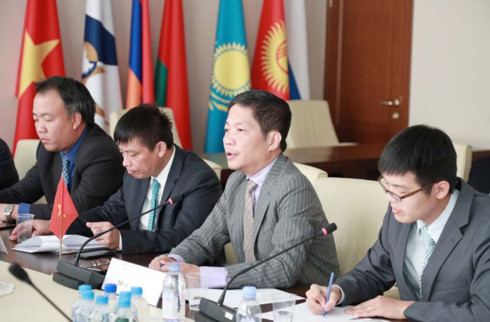
Once again, the proposal to ban the use of chrysotile has raised the concern on the trade relationship between Vietnam and members of the Eurasian Economic Union such as Russia and Kazakhstan. On 29 June 2017, within the framework of the President Tran Dai Quang’ s official visit to Russia, two economic forums Vietnam & Russia and Vietnam & Belarus were organized with the participation of many enterprises who were interesting in the market opportunities offered by the Free Trade Agreement. During the meeting with Mr. Tran Tuan Anh – Minister of Industry and Trade, Ms Veronica Nikishina – Minister for Trade of the Eurasian Economic Commission – expressed the concern over the potential ban on chrysotile in Vietnam without scientific evidence. According to the agreement, all members including Vietnam must notify, consult, negotiate and demonstrate scientific proof before imposing a ban or restriction on any product.
Vietnam agreed to carefully review and evaluate the ban on chrysotile by 2020 especially conducting more research on the safe use of chrysotile to maintain the stable relationship among members of the Free Trade Agreement.
Mai Phuong/VOV.VN