





Despite of the contradict opinions on whether or not to prohibit the use of chrysotile, it is currently used in 147 countries due to its irreplaceable advantages and the lack of convincing evidences on its effects on human health.
The controlled use of chrysotile in the world
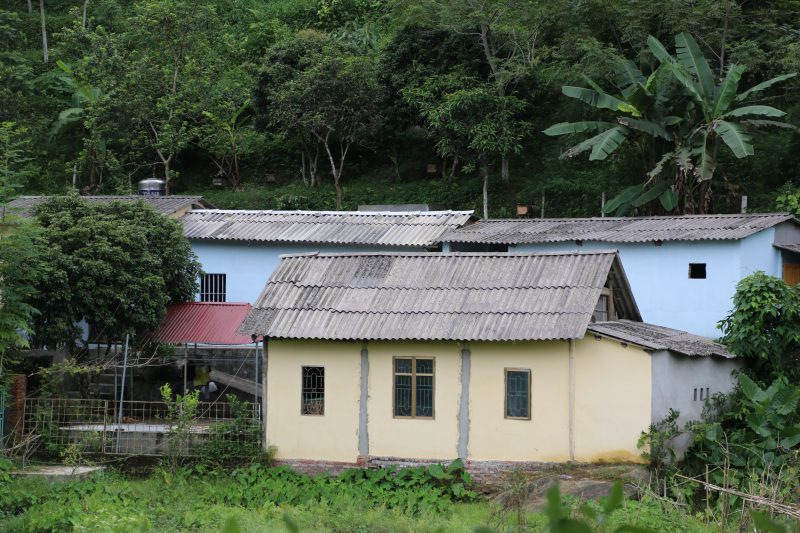
Chrysotile has been used in India since 1940, this country stands as one of the leading nations in mining and using chrysotile with the total reserves up to 22.17 million tons in 2010. Moreover, the demand of chrysotile in India is significant; according to the Indian Bureau of Mines, the country has imported 396,493 tons of chrysotile during the period from 2014 to 2015, this number is expected to be 605,000 tons during the period from 2016 to 2017.
According to Dr. Vivek Chandra Rao – the Deputy Director of Occupational Health of HIT Limited, a Fellow of Royal society of Medicine U.K. in Occupational Health section, and a Member of International commission on Occupational health(Geneva) since 1983 – in 2011, the Government of India rejected the proposal to ban the use of chrysotile by NGOs because the chrysotile using industries have strictly adhered to the Government regulations on occupational safety and hygiene and there was no persuasive evidences on the health impact of chrysotile in this country.
The Government has also promulgated the regulations relating to the air control in the production premise with the limitation of chrysotile concentration of 1.0 fibres/cc. At the same time, the factories have to examine workers’ health, store and keep track on the health data of employees during their work and retirement. In fact, the closed production technology allows to keep the chrysotile concentration level from 0.05 fibres /cc to 0.1 fibres/cc.
The occupational health examination at HIL Limited has showed that with the chrysotile concentration under control, no workers including ones with more than 30 years of experience have been diagnosed with asbestos-related diseases. Similar results are presented in the occupational health data recorded since 1980. In 2011, the National Institute of Occupational Health, Ministry of Health, under the direction of the Ministry of Chemicals and Fertilizers to investigate the health status of workers in asbestos cement industry and inhabitants living nearby the production facilities and under the asbestos cement roof sheets. The results presented that the in-premise chrysotile concentration was lower than the national limitation and no cases of asbestosis were found under that level of concentration.
In the United States, the asbestos industry has operated since 1858, especially, amphibole was widely used in uncontrolled manner, some even sprayed it directly onto the building without any protective measures. Consequently, thousand of people have been diagnosed with cancer due to amphibole exposure. Therefore, the use of asbestos was prohibited in 1989. However, the Supreme Court of the United States revoked the ban in 1991 because scientific researches in the U.S showed that using chrysotile under control cause no harm to the human health; meanwhile, chrysotile remains the irreplaceable material in multiple industries especially in aviation, space and military.
In addition to issuing strict regulations on import, transportation, manufacture, use, disposal and dismantling of chrysotile and chrysotile-containing products, the Standard of the Occupational Safety and Health Administration has issued many environment safety standards and regulation. The allowable exposure level is 0.1 fibres/cc in workplace air averaged over an 8-hour day. The employers must monitor and provide labour training, control the air environment and handle the asbestos containing waste. At the same time, OSHA also has established the standard of using chrysotile in construction and requested the employers to provide information and health surveillance to employees.
Brazil is one of the world leading countries in manufacturing and using chrysotile with the largest mine exploiting about 300,000 tons/year in 2012. Up to 60% of the population drink water from chrysotile-containing pipes and tanks. Currently, there are about 3,000 chrysotile-containing product manufacturers operating mainly in asbestos cement, friction materials, textiles, plastics, chemicals and furniture. Similar to other countries, Brazil also completes the legal framework on chrysotile to ensure environment protection and human health. Specificially, the workers’health examination and environment measure are conducted once a year; all the results will be stored for 30 years.
Cana Brava mine, which has a total area of 4.500 hectares, in which only 20% is for mining, 60% (2.500 hectares) is for natural forest with a variety of animals monitored by SAMA and 20% for residents. The mining process is operated 4 times per week, the procedure of moisturizing the ore is strictly required: moisturizing 24 hours before transfering the ore to the truck to deliver to the crushers, which are completely closed and far from the residential location. Being the biggest air filtration system in the Latin America, the air filter sector contains a total of 8.400 tube filters (6 big air filter room consisting of 17.000 bag filters). All the chrysotile fibres in the air will be kept in the tube filters while the clear air is released to the environment.
A study was conducted by Doctor Ericson Bagatin in 6,000 subjects living in 6 different cities in Brazil, all of them have at least 15 years living in chrysotile cement roofing houses. The results have demonstrated that only 0.5% was found having pleural abnormalities showing in chest X-ray scanning, and none of abnormalities were associated with chrysotile.
The current use of chrysotile in Vietnam
Chrysotile is the only type of asbestos used in Vietnam since 1963; it is mainly used in AC roof sheet manufacture and accounts for 6-10% of the product, the remaining consists of cement, kraft pulp and other additives. The Hatcheck process is applied in production to mininize the chrysotile exposure.
The Government of Vietnam has also established a legal framework to protect environment and human health such as issuing the limit of chrysotile exposure of 1.0 fibres/cc, requiring the employers to conduct annual health examination and environment measurement. Complying with the Government regulation, many factories have invested billions in innovative technology with closed and automatic bag-cutting and material mixing stages to minize the risk of exposure.
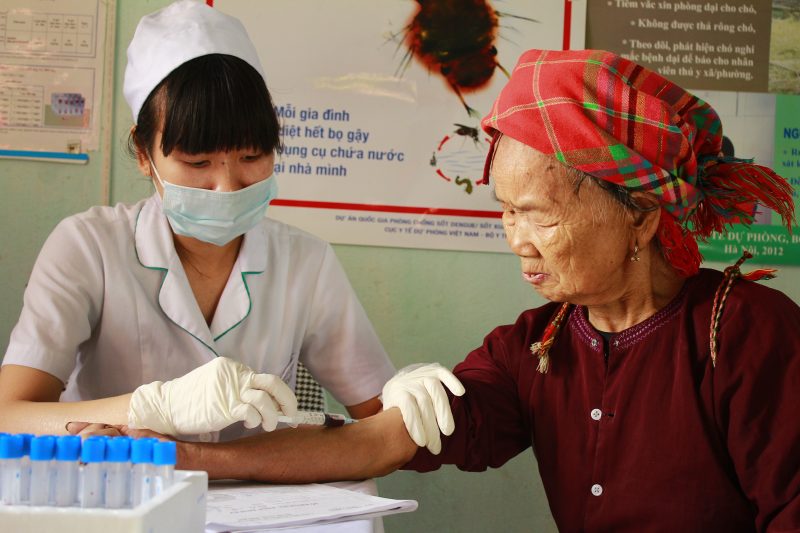
Since 2008, The Hospital of Construction – Ministry of Construction has implemented the annual occupational health check program and environment measurement in AC roof sheet production facilities. The results of 9-year review published by the prestigious Film Council confirmed that there no ARD’s were detected. Especially, from 2010 to 2014, the Hospital of Construction had conducted a study to investigate the health status of the residents in Tan Trinh commune and other communes in Quang Binh districts, Ha Giang province with total 1,046 households and 4,565 people. Up to 70% of population have been living in AC roofing houses for many years. The results have demonstrated that the mortality indexes in those communues are lower than the average of the district. Especially, the cancer mortality rate (0.858%) is only the 5th on total of 13 communes of Quang Binh district; and it is in the normal range and lower than the average. The results of air quality analysis did not find chrysotile fibers.
Presenting at the Conference on the use of chrysotile in Vietnam and in the world hosted by the Committee on Science, Technology and Environment in collaboration with the Committee on Social Affairs on 28 July 2017, Associate.Prof Tran Thi Ngoc Lan, former Deputy Director of the Occupational Environment Health Agency confirmed that among 27,000 cases of occupation diseases in Vietnam, up to 20,000 of those are caused by silic exposure, whereas there are only 3 cases of mild asbestosis.
Based on current situation, the ban on chrysotile should be carefully reviewed regarding the scientific evidences on the health impact of chrysotile in Vietnam. According to the international experience and domestic situation, chrysotile can be used safely and controllably with a comprehensive legal framework and modern technology.
More than ever, the businesses need a stable policy to secure the production and long-term investment in facility development and workplace quality improvement.
P.V